
Jet fuel or ATF prices were on Thursday were cut by a steep 4.5 per cent, the first reduction in rates in six months.
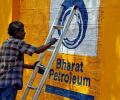
While the Union Cabinet had in November last year approved the sale of the government's entire 52.98 per cent stake in BPCL, offers seeking expression of interest (EoI), or bids showing interest in buying its stake, were invited only on March 7. The EoI submission deadline was May 2, but on March 31 it was extended up to June 13. On Wednesday, the government said this deadline is further being extended up to July 31.
The department of investment and public asset management is racing against time to launch the LIC IPO, which could become the largest-ever listing on the Indian bourses. This would lead to some delay in the strategic divestment of IDBI Bank.
On Tuesday, Petroleum Minister Dharmendra Pradhan met Russian oil giant Rosneft's chief executive officer Igor Sechin and discussed raising crude imports from that country, in addition to talks about going for more acquisitions.

Indian Oil Corporation (IOC) and two other public sector oil firms will install 22,000 electric vehicle (EV) charging stations over the next 3-5 years to support the nation's target to reduce its carbon intensity and reach net zero emissions by 2070. IOC, the country's largest state-controlled refiner by capacity, will set up EV charging facilities at 10,000 fuel outlets over the next three years, chairman Shrikant Madhav Vaidya said. Bharat Petroleum Corporation Ltd (BPCL) said it will set up 7,000 stations over the next five years while Hindustan Petroleum Corporation Ltd (HPCL) has plans for 5,000 stations.

The resignation also signals a continuing saga of unaddressed concerns of young leaders, once considered close to former Congress president Rahul Gandhi.
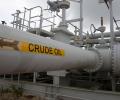
Crude oil shipments from the US to India rose to the highest levels in November since the conflict began in Ukraine in late February, sparking hopes of a resurgence in oil flows from the US to the subcontinent, reveals shipping data. Shipments from the US have surged as Western nations prepare to impose additional sanctions on Russian crude flows. The US shipped around 450,000 barrels per day of crude last month to India, twice that of shipments in October, according to data from London-based commodity intelligence provider Vortexa.
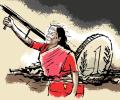
Finance Minister Nirmala Sitharaman will present the much-awaited 2022-23 Union Budget on February 1. While there has been strong recovery in some sectors, touch services like hospitality, tourism and leisure continue to suffer after two Covid-19 waves. Household savings have been hit due to increased spending on health care. Consumption has still not reached pre-pandemic levels.

Petrol price on Saturday breached the Rs 83 per litre-mark in Delhi for the first time in more than two years after a rally in international oil prices forced a 13th increase in rates in the last fortnight. Petrol price on Saturday was raised by 27 paise per litre and diesel by 25 paise, according to a price notification of oil marketing companies. Petrol price in Delhi rose to Rs 83.13 per litre from Rs 82.86. Diesel rates went up from Rs 73.07 to Rs 73.32 per litre.

'The actual price of petrol is Rs 35 and it jumps to Rs 88 because of government taxes.'
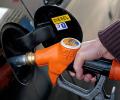
The price of diesel sold to bulk users has been hiked by about Rs 25 per litre in line with a near 40 per cent rise in international oil prices, but retail rates at petrol pumps remain unchanged, sources said. Petrol pump sales have jumped by a fifth this month after bulk users like bus fleet operators and malls queued up at petrol bunks to buy fuel rather than the usual practice of ordering directly from oil companies, widening the losses of retailers. Worst hit are private retailers like Nayara Energy, Jio-bp and Shell, who have so far refused to curtail any volume despite a surge in sales.

Petrol and diesel are among the 90-plus commodities that have been approved by the government for derivatives trading

According to data shared with the Lok Sabha, 19 road projects awarded after May 2014 were facing delays

The Centre's push to sell Air India on priority has led to delays in other strategic divestment proposals, such as privatising United India Insurance, as well as ongoing transactions, such as Shipping Corporation of India (SCI) and Bharat Petroleum Corporation (BPCL), revealed multiple officials involved in the process. The Department of Investment and Public Asset Management (DIPAM) is yet to take new privatisation recommendations of the NITI Aayog to the core group of secretaries on disinvestment (CGD) headed by the Cabinet secretary, said one of the officials. The priority now is to ensure all approvals for Air India are in place since the government intends to hand over the national carrier as early as this month.
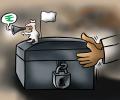
An official said the government is preparing the financial statements and getting the data room ready for the sales, suggesting that such aspects take time.

'And Joshimath has already shown the dangers ahead.' 'We have to acknowledge that our mountains are still young babies.' 'You don't put an extra load on the back of a growing child!'

All that happened in India in the past week, in photos.
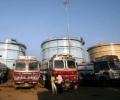
The tankers carrying fuel from terminals to dealer outlets would not just have global positioning system (GPS) tracking but also an electronic key (e-key).

This increase excludes local levies. The actual hike after considering VAT would be Rs 2.84 per litre in Delhi for petrol and Rs 2.11 for diesel.

Fernandes wanted Coca-Cola Company to not just transfer 60 per cent of the shares of its Indian firm but also the formula for its concentrate to Indian shareholders.

Wielding a broom, the prime minister took part in the drive along with fitness influencer Ankit Baiyanpuriya.

Petrol price was cut by Rs 2.43 per litre and diesel by Rs 3.60 a litre, the third reduction in rates this month.

Seven passengers were charred to death when a luxury bus caught fire after colliding with a diesel tanker in the wee hours of Wednesday on the Mumbai-Ahmedabad highway.
Revenue from divestment has fetched Rs 40,000-50,000 crore against target of Rs 2.10 trillion.

Petrol price had been cut 10 times since August 2014.

Air fares to go up as ATF price is hiked by 8.2%.
Only 48.3 per cent of the rural households used LPG, while the figures were much higher in urban areas at 86.6 per cent, according to a NSO report.

The divestment process, however, will not be an easy affair as there are multiple stakeholders, including the employee unions, whose concerns will have to be addressed.

The government is keen to close the sale before March 31, 2021, to help meet a record Rs 2.1 lakh crore target which Finance Minister Nirmala Sitharaman has set from divestment proceeds in the Budget for 2020-21.

The Public Enterprises Selection Board, which is the government head-hunter, interviewed seven candidates for the post, which fell vacant after Dinesh K Sarraf was elevated as Chairman and Managing Director of ONGC.

The government has merged the Department of Public Enterprises (DPE) with the finance ministry to give it a better control over state-owned firms and facilitate its ambitious privatisation programme. Finance ministry will now have six departments while DPE's hereto parent ministry, the ministry of heavy industries and public enterprises will now be called the ministry of heavy industries. Previously, the disinvestment ministry - created under the Atal Bihari Vajpayee government - was merged with the finance ministry and is now a department under it. Also, Foreign Investment Promotion Board (FIPB) was abolished and administration of foreign investments was given to the finance ministry (FinMin).

The Shiv Sena has spurned Congress' request to participate in the bandh.

The reduction in auto fuel prices today was the fifth cut in two months on back of softening global oil prices.

Tata Sons stake in the group's listed companies is now worth Rs 9.28 trillion, up 34.4 per cent on a year-on-year (YoY) basis. In comparison, the Government of India's stake in listed central public sector undertakings (PSUs) is currently valued at Rs 9.24 trillion

A bonus is given to existing stockholders in proportion to the number of shares they already hold.

A total of 180 NSE-listed companies have not appointed a woman director.
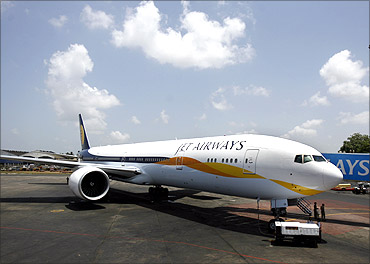
Jet fuel constitutes over 40 per cent of an airline's operating costs and the price cut will bring relief to the cash-strapped carriers.
Ujjwala Yojana was launched on May 1, 2016 at Ballia district in Uttar Pradesh and has so far covered 47.3 million consumers in 715 districts
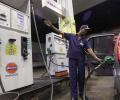
Sitharaman raised excise duty and road and infrastructure cess on the auto fuels by Rs 2 per litre each to raise over Rs 28,000 crore.
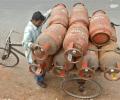
Rebuffing petroleum ministry, Siddaramaiah launches Pradhan Mantri Ujjwala Yojana-like scheme months before state polls
